Daylight Research
Tapping into the power of daylight.
Daylight connects several disciplines, and our funding program focuses primarily on research at their interfaces that unlock the full potential of this freely available resource. Therefore, this program seeks to leverage the benefits of daylight by bridging disciplines to accelerate innovation and address complex challenges, which are relevant to our society and our environment. By fostering collaborations between disciplines – especially those that rarely interact – we aim to support outside-of-the-box projects that generate impact and synergies that single-discipline approaches cannot achieve.
The daylight program at a glance
Starting in 2026, the program supports research on the effects and utilization of daylight in three societal topics:
- Future solar cities
- Daylight and global health
- Daylight in urban planning
These topics were identified by an international network of daylight experts who are members of the Daylight Academy, an initiative of Velux Stiftung. The topics are not mutually exclusive, and applications can combine several aspects. We welcome novel, outside-of-the-box approaches that align with the topic’s overarching aim, place daylight at the core of the research and bring together disciplines in innovative ways.
The full details of the call for proposal will be published by February 2026.
Of note: This first call (2026) focuses exclusively on innovative research. A fourth societal topic “Right to Daylight” and a knowledge transfer track will be open for applications in subsequent calls (2027 onwards).
Essential requirement in this funding program
Natural daylight must be at the core of both your research question and research plan. Projects where daylight is peripheral; only mimicked by artificial light or a secondary variable will not be considered.
Future solar societies
The climate crisis demands a transition from fossil-fuel dependence to solar-powered societies. Daylight is central to this transformation. Humanity once thrived on daylight before shifting to stored solar energy in fossil fuels. The coming reorganization will rely on direct daylight and its derivatives – such as wind energy and biomass – to power sustainable systems.
Aim: We seek innovative, interdisciplinary research that positions daylight as a driver of systemic change enabling the transition to future solar societies.
Daylight & global health
Daylight is a shared resource that contributes to humans, animals and ecosystems health. Understanding the benefits of daylight for health throughout living systems can inform strategies to e.g. reduce disease risks, improve public health, and support sustainable practices in farming, forestry, aquaculture, and tourism towards ecosystem resilience.
Aim: Discover new ways in which daylight can contribute to improve the health of living organisms. In this topic, we encourage projects that take a global perspective, link human, animal, and ecosystem health – and, where relevant integrate the dimension of sustainability and global environmental change.
Daylight in urban planning
Urban densification is a global trend that improves land use efficiency, energy performance, and access to services. However, higher and denser constructions often reduce daylight availability for indoor and outdoor spaces. This challenge addresses the a) objective perspective: Physical availability of daylight and physiological need for exposure, which are relatively constant across human populations but vary geographically due to latitude and climate; and the b) subjective perspective: Cultural expectations and lifestyle-driven perceptions of daylight, which differ locally and influence behaviour and well-being.
Aim: Develop strategies to reconcile urban densification with adequate daylight access by addressing both objective needs and subjective expectations across diverse geographic and cultural contexts. Global approaches or regional approaches that can be scaled will be considered but no single use-case.
Support is available for
Seed projects: Pilot, feasibility studies & proof-of-concept – “Test the impossible”
Pilot studies testing completely innovative, outside-the-box research ideas combining disciplines that do not usually work together. Projects should generate preliminary empirical data to demonstrate feasibility and potential scaling to a larger research project, though the emphasis is on high-risk exploration rather than comprehensive results. Projects with high-risk and large potential if successful.
Funding range: CHF 50’000 to CHF 100’000 for up to one year for seed research projects
Research projects: Full research project – “Deliver the breakthrough”
Larger interdisciplinary projects that carry out a full interdisciplinary research study.
Funding range: CHF 100’000 to CHF 300’000 for up to four years for research projects
Key dates of the program
- One specific call for proposals every year.
- Next deadline: 13 April 2026 at 23:59 CEST, with a final decision on proposals in November 2026
- The details of the call for proposals can be viewed here. (to be published by 02/2026).
Selection procedure
All applications go through a formal screening by the foundation management. The selection of the applications that will be presented to the board is performed by a scientific committee according to our funding criteria. The foundation board of Velux Stiftung will take the final funding decision. More information is available on our page about the selection procedure.
The priority is set on research addressing neglected issues whose results have a high potential to contribute to change.
If you are unsure about the fit of your application to the scope of the call, please send an abstract to info@veluxstiftung.ch and state the reasons why you think your project fits the call.
Projects we do not fund
Natural daylight must be at the core of both your research question and research plan. Projects where daylight is peripheral; only mimicked by artificial light or a secondary variable will not be considered.
Projects
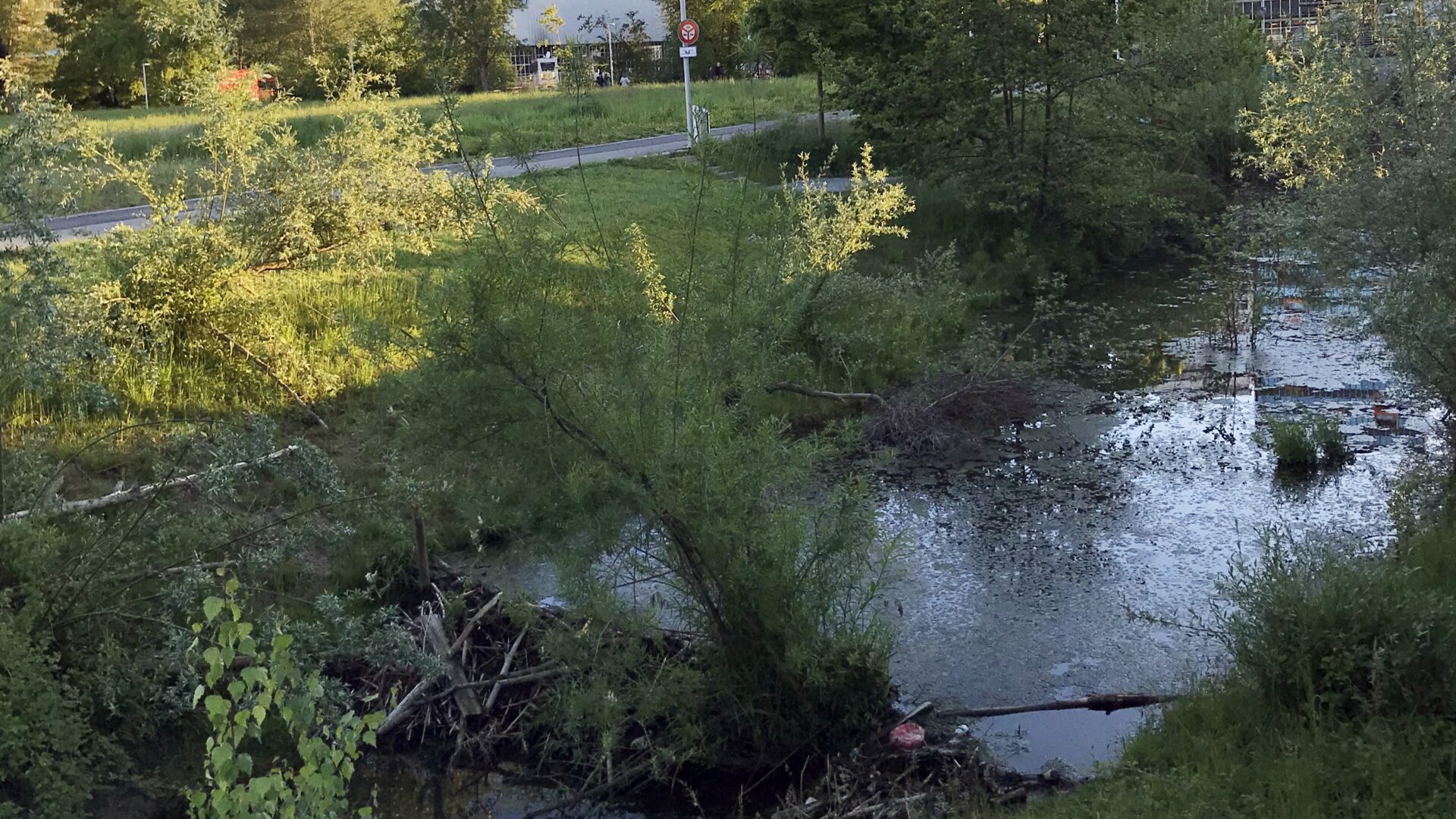
Daylight in river restoration

Plant defense under Arctic light conditions

Harnessing daylight for a healthy life
